5 Signs Your Business Has Outgrown Social Media
Social media can help people discover your business, but your website gives them a place to learn more and take action. As your business grows, having a central online presence can turn attention into meaningful customer enquiries.
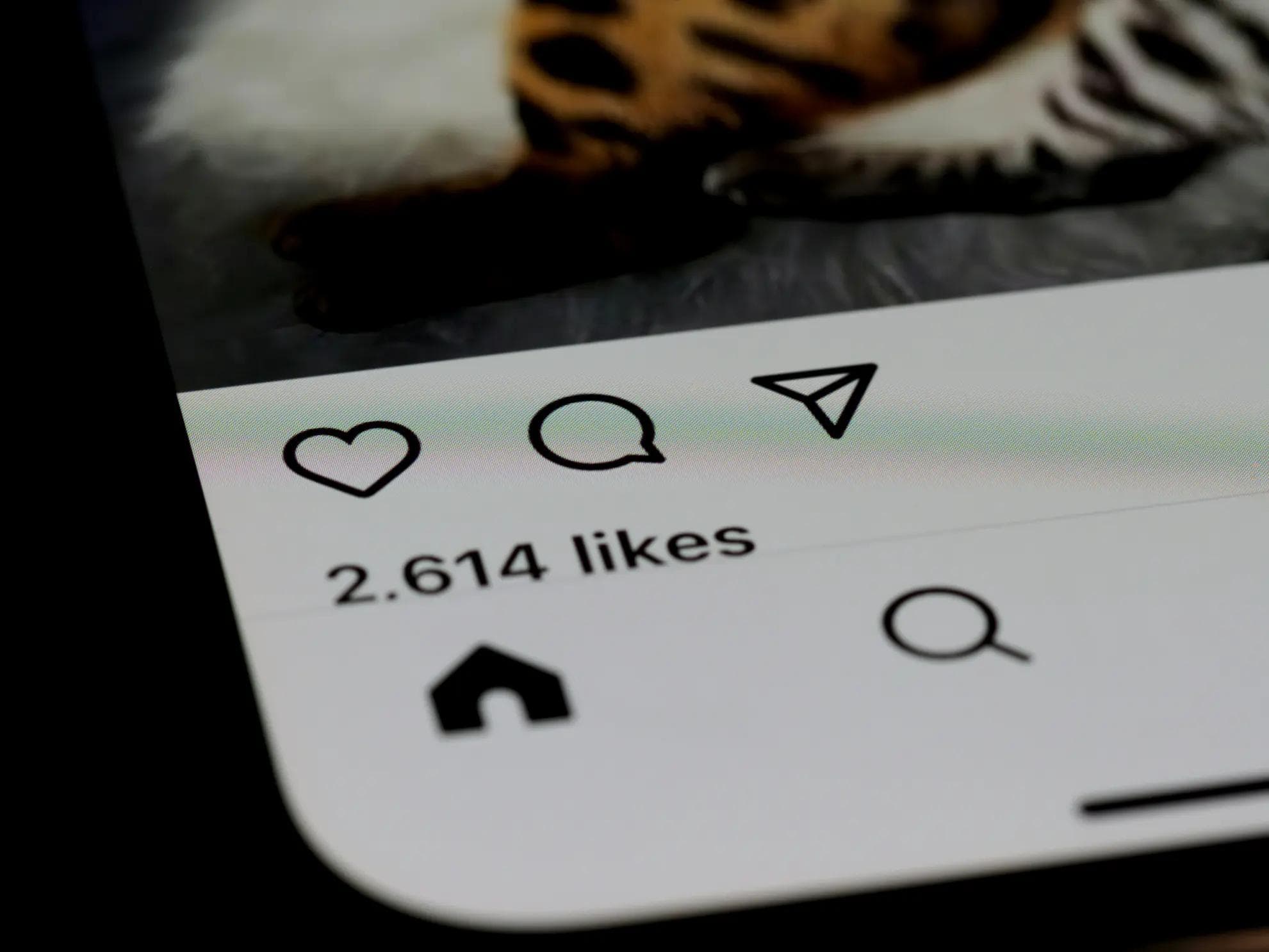
Social media has become one of the easiest ways for a business to build an online presence. Platforms such as Instagram and Facebook can help businesses showcase their products or services, connect with potential customers, share updates, and build a loyal audience.
For many small businesses, social media is the perfect place to start.
But as your business grows, you may eventually reach a point where social media alone is no longer enough.
Your customers may start asking the same questions repeatedly. Your services may become difficult to explain through short posts. Potential customers may struggle to find you on Google. And important business information can become scattered across different platforms.
This doesn't mean you should stop using social media.
Instead, it may be a sign that your business has outgrown relying on social media as its primary online presence — and that it's time to consider a professional business website.
Here are five signs to look out for.
1. You're Answering the Same Questions Over and Over
If customers frequently ask the same questions through Instagram DMs, Facebook Messenger, WhatsApp, or phone calls, that's often a sign that important information isn't easily accessible online.
You may constantly be answering questions such as:
- What services do you offer?
- How much does it cost?
- Where are you located?
- What are your business hours?
- How does your process work?
- How can I make a booking?
- How can I request a quotation?
- Do you serve customers in my area?
There's nothing wrong with answering customer questions personally. In fact, conversations with potential customers are valuable.
The problem is when your team spends significant amounts of time repeating information that could easily be available online.
A website gives your business a central place to answer these questions.
You can create dedicated pages for your services, an FAQ section, contact information, business hours, pricing guidance, service areas, and other information customers commonly need before making a decision.
This can make the customer journey much easier.
Instead of:
Customer sees your social media → sends DM → waits for response → asks questions → waits again
you can create a simpler journey:
Customer discovers your business → visits your website → finds the information they need → contacts you
Your website can handle the information while you focus on the conversation that actually matters: turning an interested visitor into a customer.
2. Your Services Are Hard to Explain Through Social Media
Social media is designed for quick consumption.
An Instagram post might give you a few paragraphs to explain a service. An Instagram bio gives you even less space. Even if you regularly publish content, older posts can quickly disappear beneath newer ones.
This can become a problem when your business offers multiple services or when your services require more explanation.
For example, a professional service provider may need to explain:
- What each service includes
- Who the service is for
- How the process works
- What makes the business different
- Frequently asked questions
- Previous projects or results
- Testimonials
- How customers can get started
Trying to communicate all of this through social media posts can make your online presence difficult to navigate.
A website gives you room to organise your information properly.
You can create dedicated service pages that explain each offering in detail and guide visitors toward the next step.
For example:
Home → Services → Website Development → View Our Work → Request a Quote
This is particularly important as your business grows.
Your website doesn't just provide more space for information. It gives you control over how that information is organised and presented.
Instead of asking customers to scroll through dozens of social media posts to understand your business, you can give them a clear path to the information they need.
3. People Can't Easily Find Your Business on Google
Social media and search engines serve different purposes.
Someone scrolling through Instagram might discover your business because they saw one of your posts, reels, or recommendations.
Someone searching Google for:
"web designer in Malaysia"
"lawyer near me"
"tuition centre in [location]"
is actively looking for something.
That difference in search intent matters.
When someone searches for a specific product or service, they may already have a problem they want to solve. If your business can appear at the right moment, your website can become an important source of new enquiries.
This is where search engine optimisation (SEO) becomes valuable.
A properly structured business website gives search engines more information about your business, your services, your locations, and the topics you specialise in.
You can create relevant pages and content around the services and questions your potential customers are searching for.
For example, instead of relying entirely on social media to reach potential customers, a web development company could create pages targeting searches such as:
- Website development services
- Website design for small businesses
- Business website development in Malaysia
- Website redesign services
- SEO-friendly website development
Social media can help you reach people who are already following you.
SEO can help you reach people who may have never heard of your business before.
That makes your website an important part of building long-term online visibility.
Social Media Discovery vs Search Discovery
The difference can be thought of simply:
Social media:"Here's something interesting you might want to see."
Google search:"I'm looking for something. Can you help me?"
A strong online presence can take advantage of both.
4. You're Relying Too Much on Direct Messages
Direct messages are useful, but they aren't always the most efficient way to manage enquiries.
Imagine a potential customer discovers your business on Instagram.
They want to learn more, so they send:
"Hi, how much is your service?"
You respond.
They ask another question.
You respond again.
Then they ask how the process works.
Another response.
Eventually, they may ask how to book or make an inquiry.
This creates unnecessary friction when much of the information could have been available before the conversation even started.
A website can act as a bridge between interest and action.
For example:
Social Media → Website → Service Information → Testimonials → Contact → Customer
Instead of immediately forcing every visitor into a conversation, your website can help educate them first.
Once they're ready, you can direct them toward the action that makes sense for your business:
- Send a WhatsApp message
- Call your business
- Submit an enquiry form
- Request a quotation
- Book an appointment
- Schedule a consultation
- Make a purchase
- Sign up for a service
This is one of the biggest differences between simply having an online presence and having a conversion-focused website.
Your website should not only tell people who you are.
It should make it obvious what they should do next.
5. Your Business Information Is Scattered Across Different Platforms
As your business grows, information tends to end up everywhere.
Your services might be listed on Instagram.
Your reviews might be on Google.
Your contact information might be on Facebook.
Your portfolio might be hidden among old Instagram posts.
Your latest promotions might only be available through a social media story.
And customers may have to jump between several platforms just to understand what your business offers.
This creates an inconsistent customer experience.
A website can become your central digital home.
You can bring your most important information together in one place:
- About your business
- Products and services
- Portfolio or previous work
- Customer testimonials
- Frequently asked questions
- Contact information
- Location and opening hours
- Blog and useful resources
- Promotions and announcements
- Booking or enquiry forms
More importantly, you control how this information is presented.
Social media platforms can change their layouts, algorithms, features, and policies. Your website gives you a digital presence that isn't dependent on what appears in someone's social media feed.
Your social media profiles can then direct people back to your website.
Instead of treating every platform as a separate online presence, your website can become the central hub connecting everything together.
Your Business Doesn't Have to Choose Between Social Media and a Website
Having a website doesn't mean you need to abandon Instagram, Facebook, LinkedIn, or other social media platforms.
In fact, the strongest strategy is often to use them together.
Think of it this way:
Social media gets attention.
Your website provides information.
Your website builds trust.
Your website encourages action.
The customer journey might look like this:
Social Media → Website → Trust → Enquiry → Customer
For example, someone might discover your business through an Instagram post.
They click your profile.
Your bio directs them to your website.
They visit your service page, look at your portfolio, read your testimonials, and learn more about your process.
Once they're comfortable, they click your WhatsApp button and start a conversation.
Every part of that journey has a purpose.
Social media helped you get discovered.
Your website helped the visitor make a decision.
Your contact channel helped turn that interest into an actual enquiry.
A Website Should Do More Than Look Good
One of the biggest misconceptions about business websites is that their primary purpose is simply to make a company look professional.
A professional design certainly matters.
But a good business website should do much more than that.
It should help your business:
- Get discovered through search engines
- Explain your products and services
- Build credibility and trust
- Showcase your previous work
- Answer customer questions
- Generate enquiries
- Direct customers toward the right action
- Support your digital marketing efforts
- Provide a central source of accurate business information
This is why website development and SEO often work best together.
Your website gives search engines somewhere to send potential customers.
SEO helps those potential customers discover you.
Your website then gives them the information they need to decide whether they should contact you.
So, Has Your Business Outgrown Social Media?
You don't necessarily need a website just because everyone else has one.
But if your business is growing, it's worth asking yourself a few questions:
Are customers constantly asking questions that could be answered online?
Is it difficult to explain everything you offer through your social media profiles?
Are potential customers finding your competitors on Google instead of you?
Are you relying heavily on DMs to handle enquiries?
Is your business information spread across multiple platforms?
If you answered "yes" to several of these questions, it may be time to consider building a website for your business.
Your social media presence can continue doing what it does best: getting people interested in your business.
Your website can then give those people somewhere to go, learn more, build confidence, and take the next step.
The goal isn't:
Social Media vs Website
It's:
Social Media + Website
Because your website shouldn't just exist to make your business look professional.
It should help your business get discovered, build trust, generate enquiries, and grow.
Is Your Business Ready for a Website?
At Accenis Solutions, we build business websites designed around more than just aesthetics.
We focus on creating websites that clearly communicate your services, support search engine visibility, build customer trust, and guide visitors toward taking action.
Whether you're building your first website or your existing website no longer reflects where your business is today, the right website can become an important part of your overall digital strategy.
Ready to build a stronger online presence? Get in touch with Accenis Solutions to discuss your website.
More from our blog

How to Build an Internal Operations Workflow for Better Team Communication
Learn how to build a structured internal operations workflow that improves team communication, clarifies responsibilities, automates repetitive tasks, and reduces manual follow-ups.
How to Choose the Right Digital Marketing Agency in Malaysia for Your Business
Discover how to choose the right digital marketing agency in Malaysia to grow your business through SEO, websites, and online strategies.
Web Developer Malaysia: How to Choose the Right Partner for Your Business
Discover how a web developer in Malaysia can help your business build a professional, SEO-friendly website that attracts customers and generates leads.